
Concrete removal Mesa projects may look straightforward, but they are anything but simple. Old slabs, driveways, and foundations are heavy, dense, and often reinforced with steel rebar. One wrong move can damage underground utilities, injure workers, or leave a bigger mess than you started with.
When you need a demolition contractor in the Mesa and Phoenix area, the difference between a smooth job and a costly mistake comes down to experience. Professional crews bring the right equipment, local permit knowledge, and safe disposal practices that protect your property from start to finish.
Why Concrete Removal Requires Professionals
First, consider the sheer weight involved. A standard 4-inch concrete slab weighs roughly 50 pounds per square foot. That is not a weekend rental-tool job. It requires trained crews, proper machinery, and a clear safety plan.
In addition, Mesa’s underground infrastructure adds real danger. Hitting a gas line, water main, or electrical conduit can cause costly utility repairs, service outages, or serious injury. Professional crews locate all utilities before any breaking begins.
Arizona’s extreme heat also plays a role. Concrete expands and contracts with temperature swings, which can make slabs crack unpredictably during removal. However, experienced crews know how to read these stress points and work safely around them.
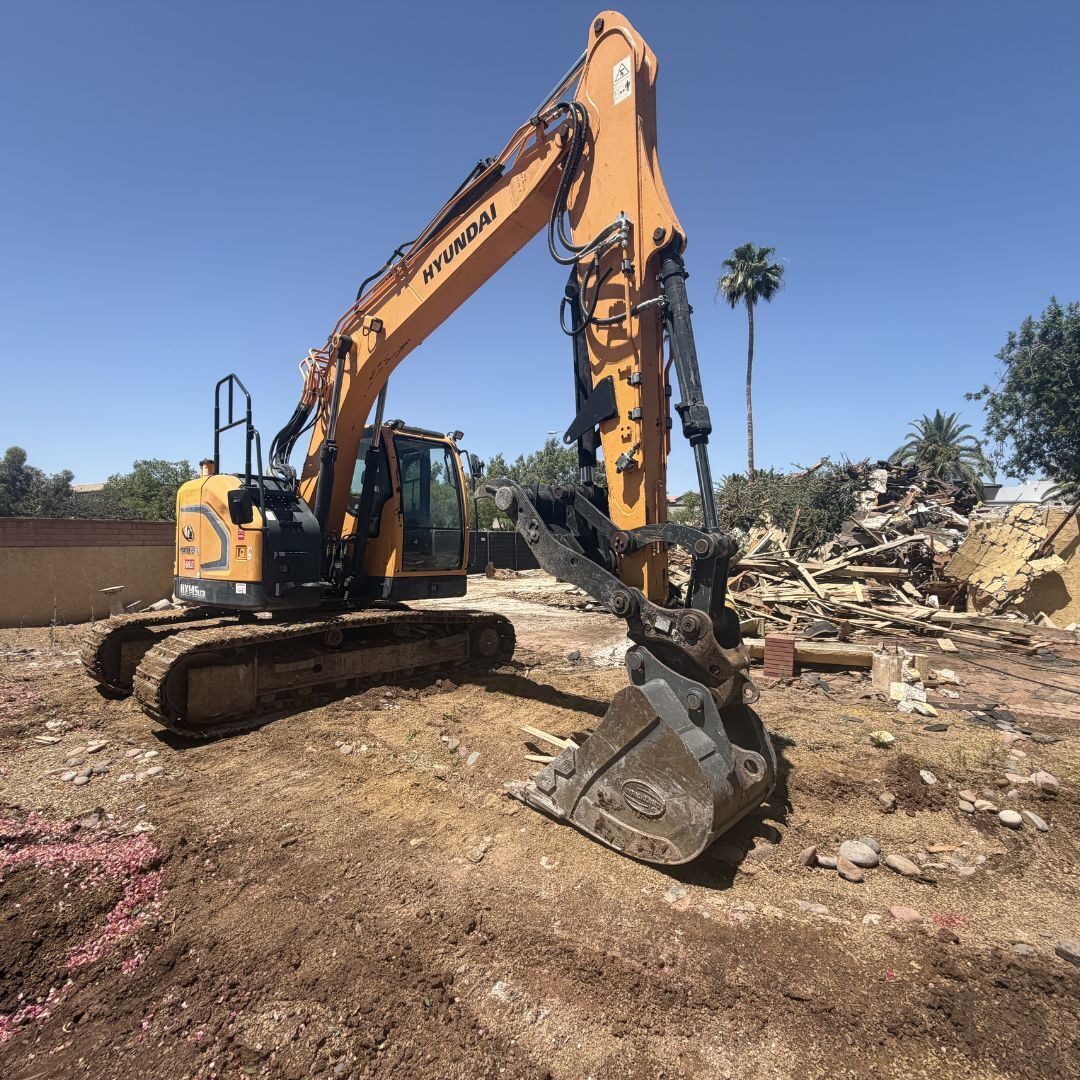
Professional teams carry the right equipment (hydraulic breakers, skid steers, and haul trucks) to move debris fast and clean. Because proper disposal matters too, licensed contractors follow EPA guidelines for construction and demolition waste.
Finally, many slab removal jobs in Mesa require permits, especially near structures or public right-of-ways. Our residential demolition team handles all permit coordination so you don’t have to. Specifically, the City of Mesa enforces strict rules on demolition and grading activity.
Concrete Removal Mesa: Types of Projects We Handle
Our crews tackle a wide range of removal jobs, and each one demands a different approach. From small backyard slabs to large commercial pads, knowing your project type helps set the right expectations from the start.
Residential Projects
Homeowners in Mesa most often need concrete removed from these areas:
- Driveways: Cracked or sunken driveways are a common request across the Valley.
- Patios and walkways: Older slabs shift over time due to Arizona’s extreme heat cycles and dry soil conditions.
- Pool decks: Removing damaged pool surrounds requires careful work near plumbing and electrical lines.
- Garage floors: Spalling or uneven garage slabs often need full removal before resurfacing.
For more on what our residential demolition crews handle, visit that service page.
Commercial Projects
Commercial jobs are larger in scale and often time-sensitive. For example, retail parking lots, warehouse floors, and loading docks all require heavy equipment and strict scheduling.
Key commercial project types include parking lot demolition, sidewalk and curb removal, foundation breaking and hauling, and interior concrete floor removal. Because downtime costs money, commercial clients need a crew that works efficiently. Our commercial demolition team is built for exactly that.
Specialty and Structural Removal
Finally, some projects go beyond standard slab work. Retaining walls need hydraulic breakers and careful debris management. Stamped or decorative concrete requires extra care to protect surrounding landscaping. Footings and foundations are denser and take more time to break apart safely. Moreover, reinforced concrete is significantly heavier than standard poured slabs, making proper equipment and trained crews essential, not optional.
The Removal Process Step by Step
When planning any slab removal project in Mesa, knowing what to expect helps you prepare and avoid surprises. A professional crew follows a clear, proven sequence every time.
Step 1: Site Assessment and Planning. First, the team inspects the area. They check the concrete’s thickness, reinforcement type, and access points. They also locate underground utilities before any work begins.
Step 2: Equipment Setup and Safety Prep. Next, crews set up the right tools (jackhammers, hydraulic breakers, or saw-cutting equipment) based on job size. Safety barriers protect nearby structures and bystanders.
Also, dust suppression measures go into place. Mesa’s dry climate makes airborne silica dust a real concern. OSHA standards require controls to keep workers safe on every demolition site.
Step 3: Breaking and Demolition. The breaking phase is the most labor-intensive part. Crews work in sections, breaking concrete into manageable chunks. For reinforced slabs, they also cut and remove embedded rebar.
This phase typically involves scoring cut lines with a concrete saw, breaking sections with hydraulic equipment, pulling out rebar and mesh separately, and stacking debris for efficient loading.
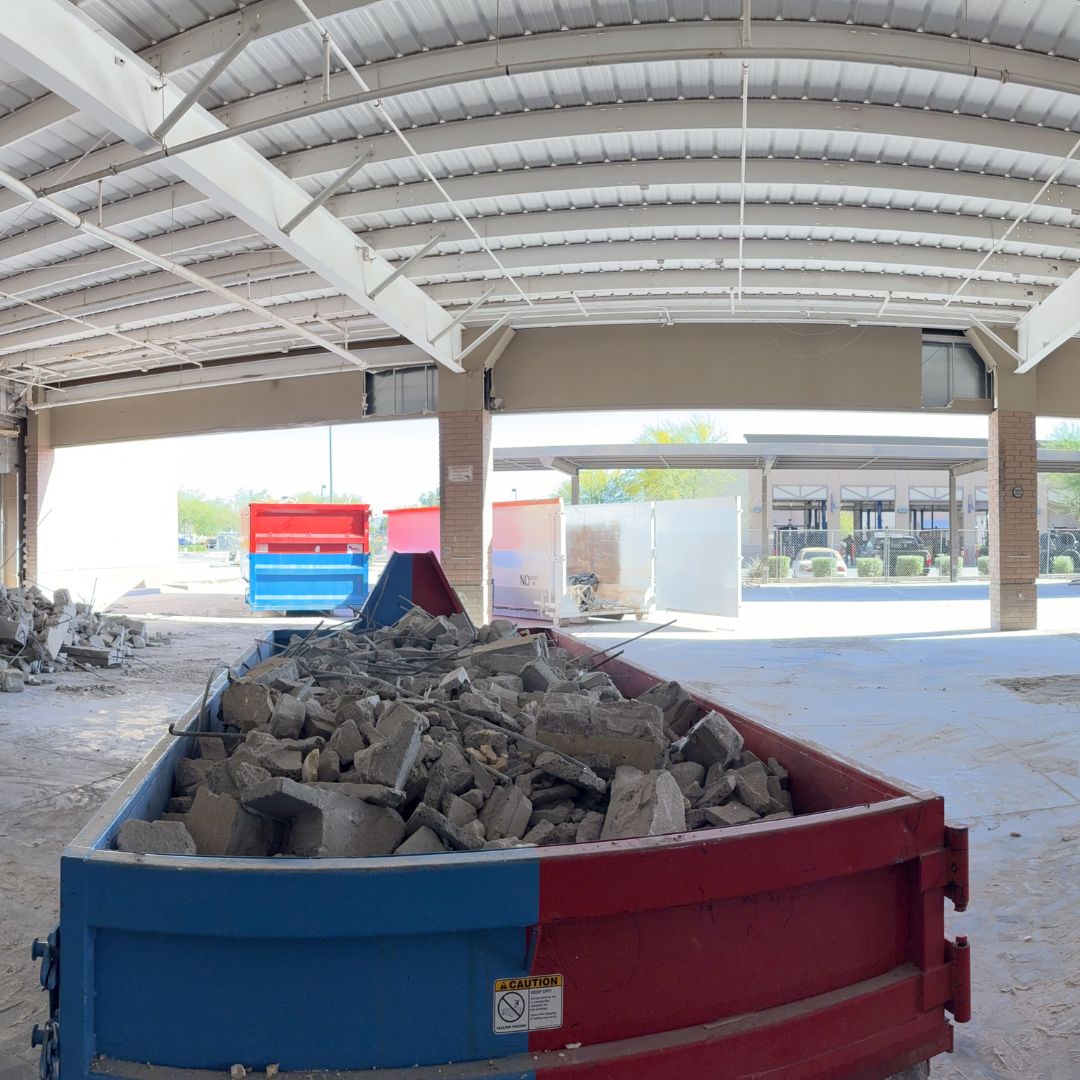
Step 4: Debris Removal and Haul-Away. Finally, all broken material gets loaded and hauled off-site. Our team handles full construction debris removal so you’re left with a clean, ready-to-use space. Concrete is heavy (one cubic yard weighs roughly 4,000 pounds), so proper trucks are essential.
Step 5: Site Cleanup and Final Inspection. In addition to hauling debris, crews sweep and grade the area. A final walkthrough confirms the space is clear and ready for your next project. For details on our full process, visit our services page.
Removal vs. Replacement: Making the Smart Choice in Mesa
When weighing concrete removal against full replacement, the right answer depends on your specific situation. Both options have clear benefits, but choosing wrong can cost you time and money.
When Removal Alone Makes Sense
Sometimes you simply need the concrete gone. Removal without replacement is often the smarter move when you are redesigning the space, the subgrade needs repair first, you are selling the property and want to boost curb appeal, or a structure is being fully demolished as part of a larger residential demolition project.
In these cases, paying for new concrete right away adds unnecessary cost and complexity.
When Full Replacement Pays Off
However, removal paired with replacement often delivers better long-term value. Consider replacement when cracks run deeper than surface level, the slab has shifted or settled unevenly, you need a functional surface back in service quickly, or the existing concrete is more than 25-30 years old.
A well-poured replacement slab can last decades with proper maintenance, according to Portland Cement Association data.
Mesa’s Climate Factor
Mesa’s extreme heat, with summers regularly topping 110°F, accelerates concrete wear. Because of this, cracked or spalled slabs deteriorate faster here than in cooler climates. Waiting too long to act often turns a simple removal job into a larger, more complex project.
Quick Decision Guide
| Situation | Best Move |
|---|---|
| Redesigning landscape | Removal only |
| Damaged functional surface | Removal + replacement |
| Drainage or soil issues | Removal, repair, then replace |
| Partial damage | Targeted removal + patch |
For help deciding, explore our services page or contact our team directly.
Concrete Removal Mesa Pricing Tiers & Project Comparison
Slab removal projects in Mesa vary widely in scope and complexity. Because of that, pricing falls into clear tiers based on job size, access, and material thickness.
No two jobs are identical. However, most work fits into one of five tiers based on square footage, thickness, access, and disposal needs. For example, a small patio break-up is a very different job than removing a reinforced commercial foundation.
Tier Breakdown at a Glance
| Project Type | Typical Tier | Notes |
|---|---|---|
| Small patio or walkway | Entry-tier | Easy access, thin slab |
| Standard driveway | Standard-tier | Mid-size, minimal rebar |
| Pool deck removal | Mid-tier | Curved cuts, tight access |
| Full driveway + apron | Upper-tier | Large volume, rebar likely |
| Commercial slab or foundation | Premium-tier | Heavy equipment, permits |
First, thickness matters most. Slabs over 6 inches thick, especially those with rebar, take longer to cut and haul. Also, tight access points require smaller equipment, which adds labor time.
In addition, disposal fees in Maricopa County can shift your total. Recycling concrete locally helps offset some of those costs. Furthermore, recycled concrete aggregate is reused in road base and fill projects, reducing landfill waste significantly.
Finally, permits may apply for larger commercial jobs. Check with the City of Mesa Development Services for current requirements. For a full breakdown of what your project might involve, visit our service areas page.
FAQ
Phone: (602) 623-8320
Request a Free Quote
