
When considering mobile home demolition Chandler homeowners face a big decision: one that affects timelines, future property plans, and the safety of everyone nearby. Whether your manufactured home is aging, damaged, or simply in the way of new construction, tearing it down the right way matters.
Planning ahead is the single most important thing you can do before any demolition project begins. Utility disconnections, hazardous material testing, and permit approvals all require lead time. Most projects in this area need at least one to two weeks of preparation before physical work can start.
This guide walks you through the five most important things to know, from permits and process to choosing the right demolition method for your property.
Why Chandler Homeowners Choose Professional Demolition
Homeowners planning a manufactured home teardown face a clear choice: hire a licensed crew or attempt the work themselves. Most choose professional help, and for good reason.
Safety risks are real. Older mobile homes often contain asbestos, lead paint, and mold. The EPA confirms that homes built before 1980 have a high probability of containing asbestos materials. Disturbing these without proper gear puts your family and neighbors at serious risk.
Professional crews are trained to:
- Identify and safely remove hazardous materials
- Follow OSHA handling and disposal standards
- Protect surrounding structures and landscaping
Local rules add complexity. Chandler sits within Maricopa County, which enforces strict demolition codes. Pulling the right permits, scheduling inspections, and meeting disposal rules takes time. A licensed demolition contractor already knows this process inside and out. Missing a step can delay your project by weeks and trigger fines from the city or county.
Faster timelines, less stress. Most professional mobile home teardowns in the Chandler area wrap up in one to three days. That means your lot is cleared and ready for its next use faster than most homeowners expect.
- Single-wide units: typically completed in one day
- Double-wide units: usually two to three days
- Complex sites with utilities: may require additional scheduling
For a full look at what our team handles across the region, visit our Chandler service area page.
The Demolition Process Step by Step
Understanding the full teardown process helps you plan ahead and avoid surprises. Each phase builds on the last, so knowing what comes next keeps your project on track.
Phase 1: Site Assessment and Planning. First, a crew visits your property to evaluate the structure. They check the home’s size, age, and condition. They also note nearby utilities, fences, and access points.
Key items reviewed during assessment:
- Utility connections (gas, water, electric, sewer)
- Asbestos or hazardous material presence in older units
- Site access for heavy equipment
- Debris volume and haul-off needs
Phase 2: Utility Disconnection. Next, all utilities must be safely shut off before work begins. Your contractor coordinates with local providers to disconnect gas, electric, and water lines. This step is non-negotiable for safety.
Phase 3: Hazardous Material Removal. Specifically, any asbestos, lead paint, or other hazardous materials are removed by certified specialists. This protects workers and neighbors alike. Skipping this step can result in serious fines.
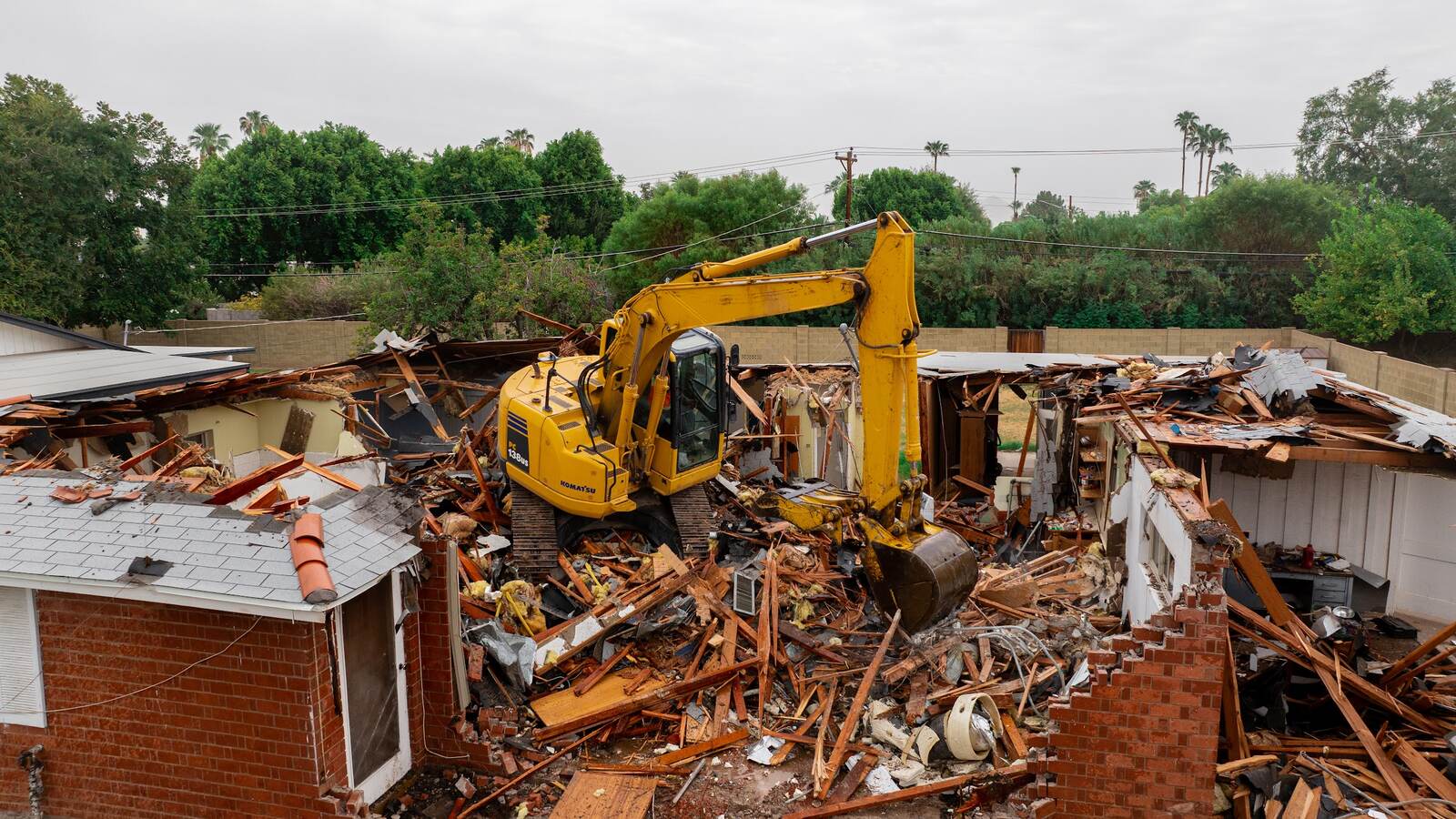
Phase 4: Structural Teardown. The actual demolition begins using excavators, skid steers, or manual tools depending on the site. Most single-wide units are fully torn down in one to two days.
The process typically follows this order:
- Remove doors, windows, and salvageable materials
- Tear down walls and roof sections
- Break up the floor and frame
- Disconnect and remove the chassis or foundation
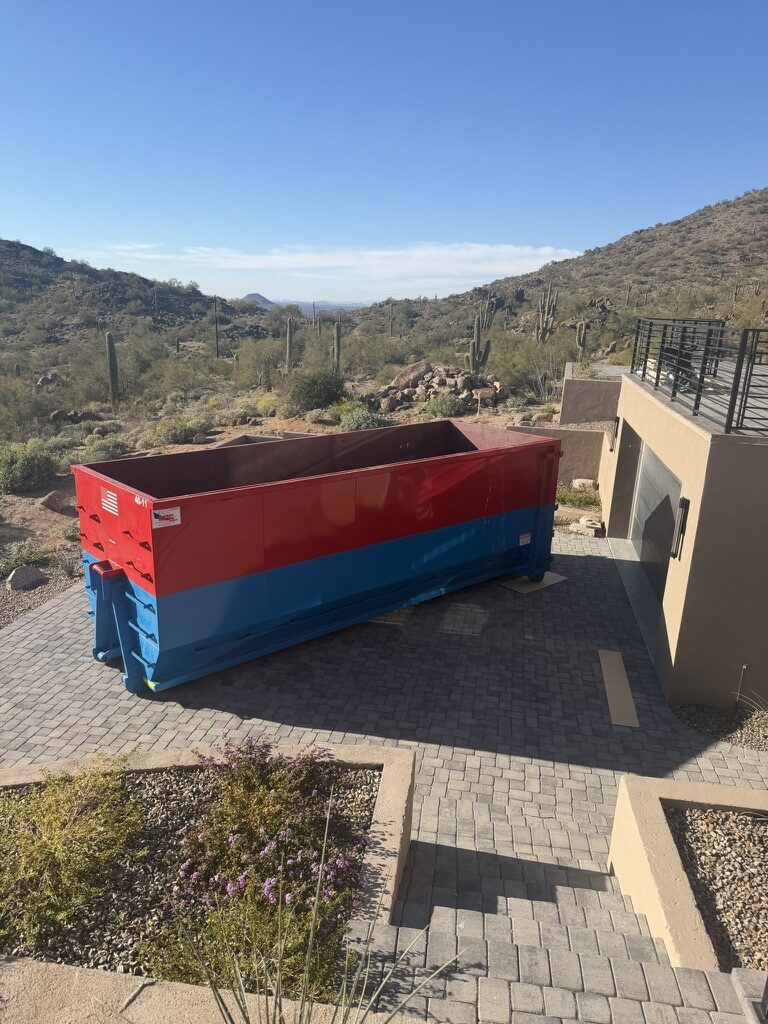
Phase 5: Debris Removal and Site Cleanup. After teardown, all debris is loaded and hauled away. For details on what this involves, see our construction debris removal page. A clean, graded lot is the final deliverable.
Permits and Regulations in Chandler AZ
Before any structure comes down, paperwork must go up. Chandler enforces a clear permitting process, and skipping steps can lead to fines, project delays, or legal trouble.
The City of Chandler Development Services requires a demolition permit for removing any residential structure, including mobile and manufactured homes. Here’s what the process typically involves:
- Demolition permit application submitted to the city
- Utility disconnection verification: gas, electric, and water must be shut off before work begins
- Asbestos inspection report if the home was built before 1980
- Site plan showing the structure’s location on the lot
- Final inspection once demolition is complete
Asbestos and hazmat rules. In Arizona, the Maricopa County Air Quality Department requires an accredited asbestos inspector to survey the site before demolition begins. Improper removal can trigger fines under EPA NESHAP regulations. Lead paint is also common in older units, and contractors must follow EPA RRP rules for safe handling and disposal.
Arizona state requirements. Arizona also requires contractors to hold an active ROC (Registrar of Contractors) license. Always verify your contractor’s license before signing anything. Working with an unlicensed crew puts you at legal and financial risk.
Timeline for approval. Permit processing times in Chandler vary, so plan ahead: delays in permitting push back your entire project schedule. Unpermitted demolition work can also complicate future property sales or new construction approvals.
Demolition Methods Compared: What Works Best in Chandler
Not every teardown job is the same. The right method depends on your site, goals, and timeline. Understanding your options helps you make a smarter choice.
Mechanical demolition uses heavy equipment (excavators, bulldozers, and skid steers) to tear down a structure quickly. For most Chandler properties, this is the fastest option. It completes most jobs in one to two days and handles single-wide and double-wide units equally well. However, mechanical demolition produces more mixed debris. See our construction debris removal page for details on what happens after the structure comes down.
Deconstruction (selective demolition) is the careful, manual removal of materials. Workers salvage usable parts (cabinets, doors, windows, and framing) before the rest is torn down. Salvageable materials can offset overall project costs, and this approach reduces landfill waste significantly. In contrast, deconstruction takes longer and requires more labor hours than mechanical methods.
Hybrid approach. Many Chandler contractors use a combination: crews manually remove high-value or hazardous materials first, then mechanical equipment handles the remaining structure. This balances speed with material recovery. For most residential teardowns in the area, the hybrid approach delivers the best overall results.
Which Method Fits Your Project?
| Method | Best For | Speed | Material Recovery | Cost Tier |
|---|---|---|---|---|
| Mechanical | Quick lot clearance | Fastest | Low | Entry-tier |
| Deconstruction | Maximum salvage value | Slowest | High | Upper-tier |
| Hybrid | Balanced needs | Moderate | Medium | Standard-tier |
Our residential demolition team can assess your specific site and recommend the right approach for your property.
Get a Free Quote for Your Demolition Project
Ready to move forward? Getting a quote is simple and takes just a few minutes. Our team reviews every project individually, because no two properties are the same. We factor in structure size, site access, permit needs, and debris volume before giving you a clear estimate.
Speed up your quote by gathering these details first:
- Property address and lot size
- Mobile home dimensions (single-wide vs. double-wide)
- Utility disconnect status: gas, water, and electric
- Any known hazardous materials, such as asbestos or lead paint
- Your target timeline for project completion
Securing permits early prevents costly delays. Contact us today to connect with a licensed demolition specialist.
KOGAN LLC Demolition & Construction
Phone: (602) 623-8320
Visit our Chandler service page or explore our residential demolition services.
FAQ
